Securing Dismissal in a Decades-Spanning Employment and Pension Dispute
Historical facts reaching back to 1990, an earlier judgment confirming an employment relationship, and a subsequent action seeking pension-related compensation.
Client Represented
Mark represented the defendant company in the subsequent court proceeding.
Court
Beijing Dongcheng District People’s Court.
Outcome
The court dismissed the action. The opposing party did not appeal, and the ruling became final.
An earlier judgment had already confirmed historical employment.
Before Mark was appointed in this case, the opposing party had obtained a judgment confirming a historical employment relationship with the company.
The subsequent action relied on that established relationship to pursue further compensation associated with historical social-insurance contributions and pension losses.
The underlying history began in 1990 and extended across different periods of employment and social-insurance regulation. By the time of the subsequent dispute, the claimant had retired.
The company therefore faced a demanding position: the historical relationship had already been judicially recognized, but the later compensation action raised additional legal and procedural questions.
Distinguishing a recognized relationship from a viable subsequent action.
Mark’s work focused on the applicable legal framework, the nature of the later requests and the procedural requirements relevant to those requests.
Examine the chronology and legal framework
The historical employment finding, asserted contribution omissions, retirement status and later pension-related requests had to be considered as distinct components of the record.
Identify what the subsequent action actually sought
The existence of a historical employment relationship did not itself resolve the basis, scope or procedural treatment of every later compensation request.
Address the court’s acceptance framework
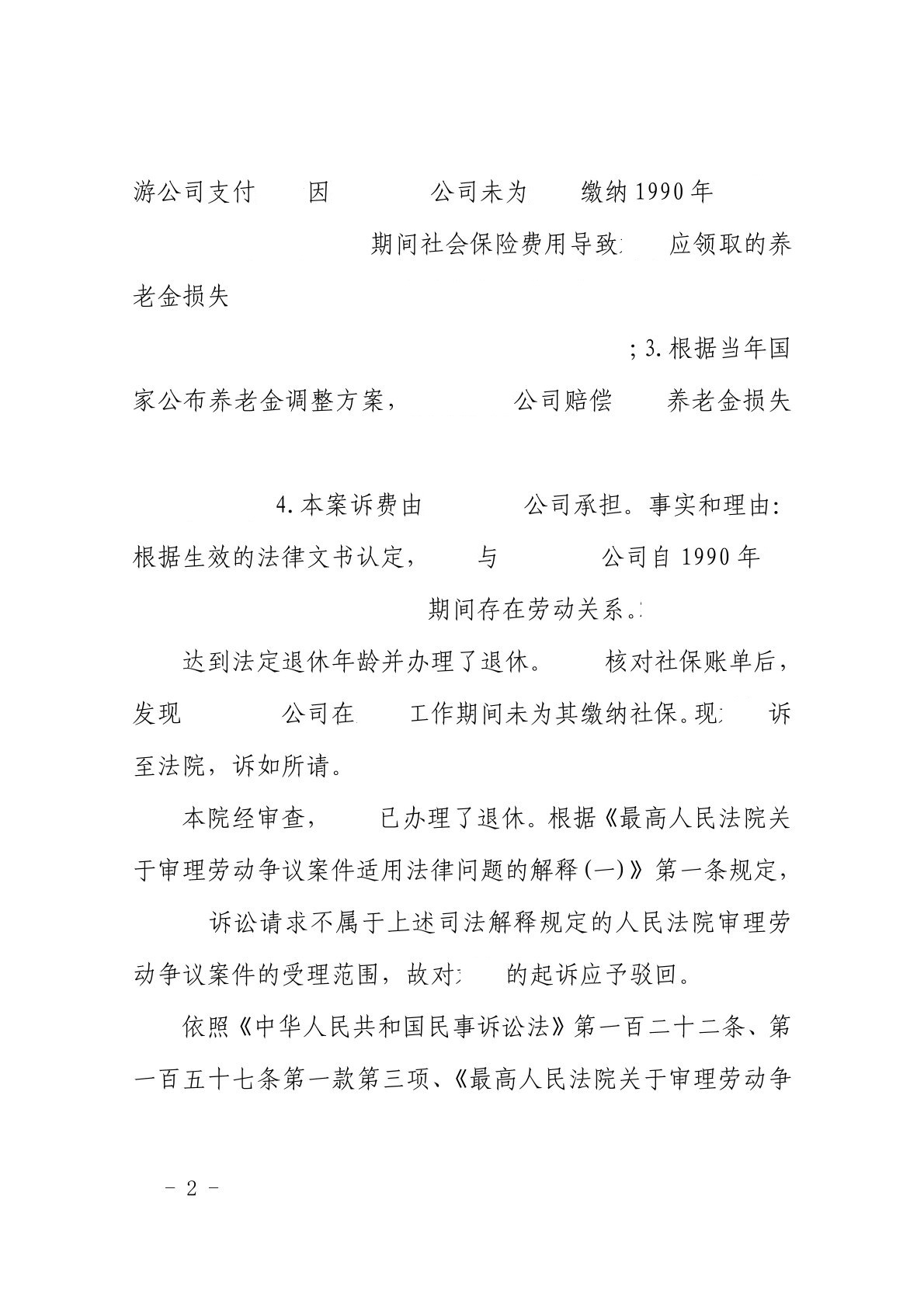
The decisive issue recorded in the ruling was whether the pleaded requests fell within the scope of employment disputes accepted by the people’s courts under the cited judicial interpretation.
The action was dismissed, and the ruling became final.
The court’s written reasoning stated that the requests did not fall within the employment-dispute acceptance scope addressed by the judicial interpretation cited in the ruling.
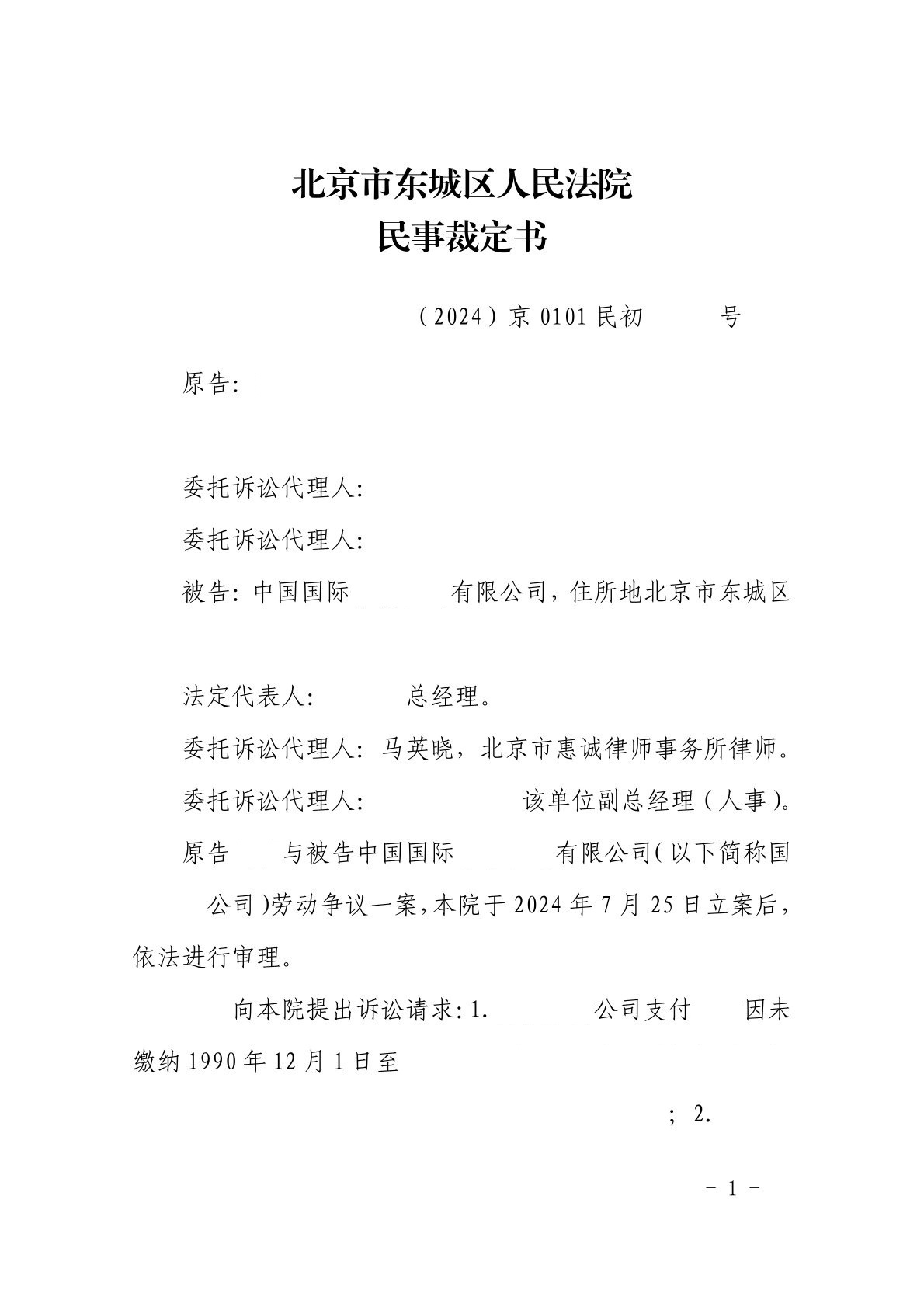
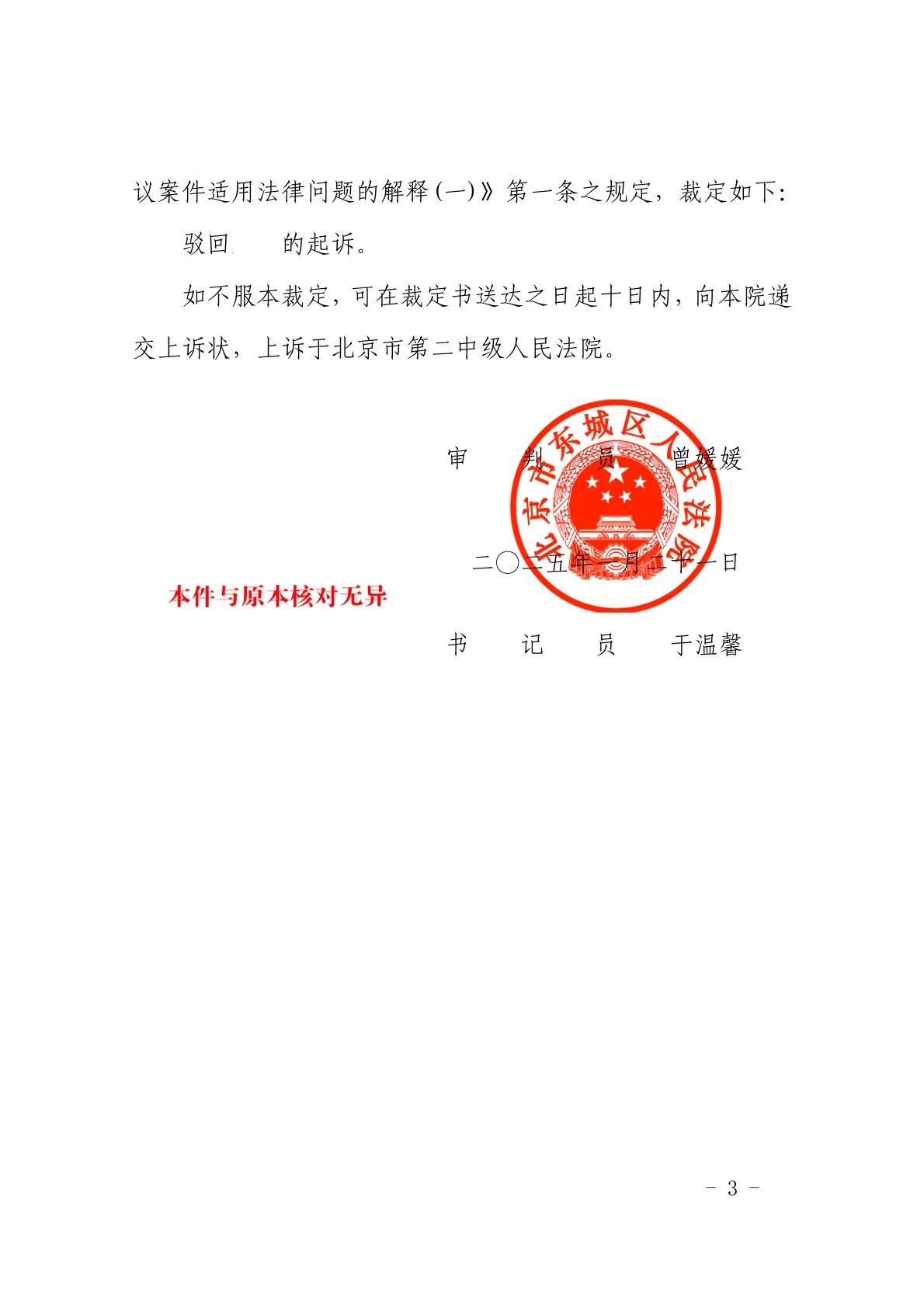
The court accordingly issued a civil ruling dismissing the claimant’s action.
The claimant did not appeal within the applicable period. The dismissal ruling became final, bringing that proceeding to an end.
This was a significant result for the company in a difficult case: an earlier employment-status judgment had already been obtained, yet the subsequent action was successfully brought to an end.
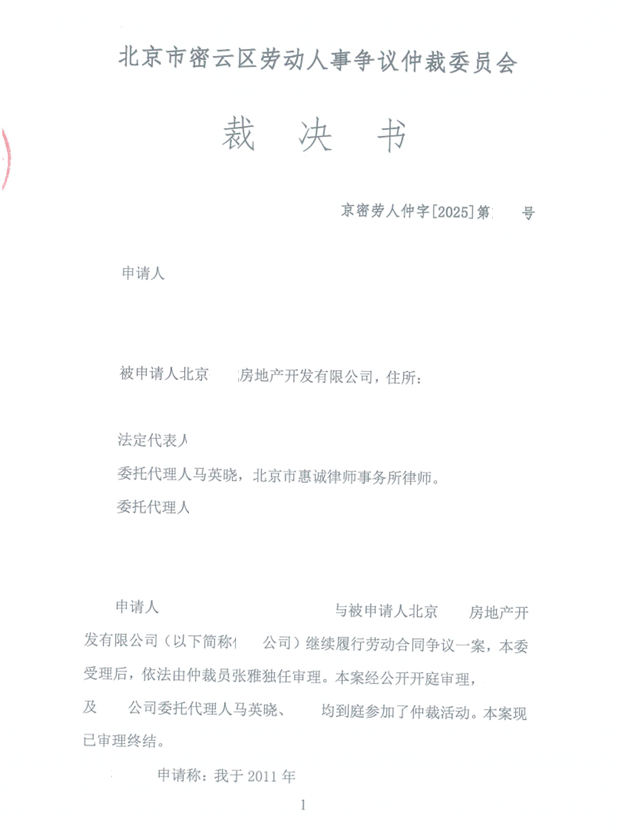
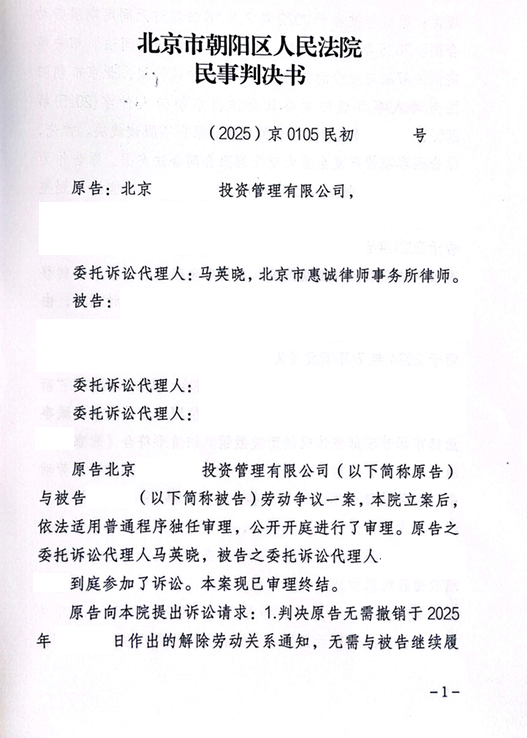
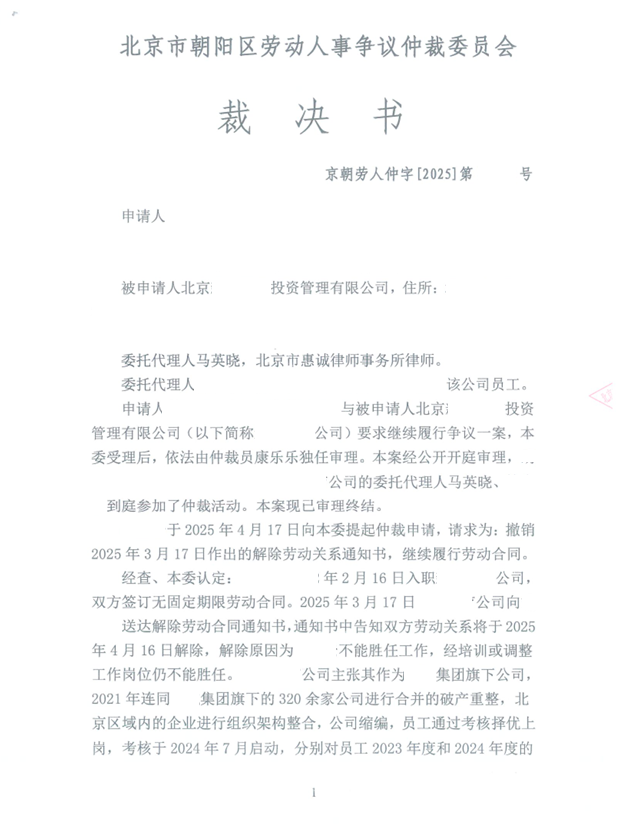
The three pages of the same ruling.
The following images form one court ruling, not three separate cases. Party details and identifying case information have been redacted.